Rummy 500 - Card Game
- 4.6
- Rating
- 1.00M
- Installs
- Free
- Price
 Analysis by App-foxy
I approached Rummy 500 - Card Game as the kind of game I could open for a short break without having to learn a complicated interface first. It is a free card game from FIOGONIA LIMITED, built around the familiar Rummy 500 rules rather than a large collection of unrelated modes. That focus is important: the appeal comes from making sensible choices with the cards in front of you, not from collecting characters, managing a large progression system, or navigating a crowded social platform.
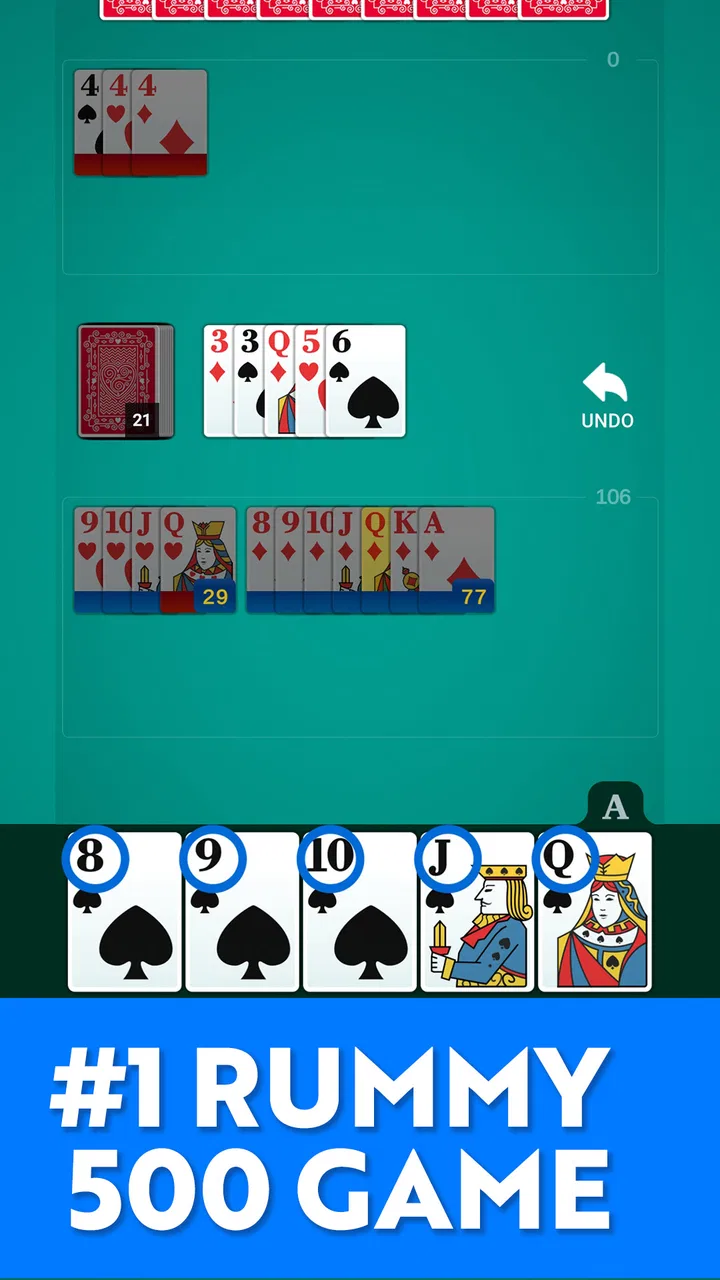
My first impression was that the large cards make the table easy to read. That sounds like a small design choice, but it matters when you are checking possible runs, looking for matching sets, or deciding whether the discard pile is worth taking. The presentation feels aimed at relaxed play, and the smart AI gives the game enough resistance to make each hand feel like a decision instead of a routine tap-through.
The game has an average rating of 4.7 from around 5 thousand ratings, with roughly 1 thousand written reviews and over 100 thousand installs. Those figures suggest that it has found an audience among people who want a straightforward digital version of this particular card game. I would still treat those numbers as a starting point rather than a guarantee, because your enjoyment will depend heavily on whether you already like Rummy 500’s scoring and discard decisions.
You May Also Like

 Blood Strike: 2.5 Anniversary
Blood Strike’s Loadouts Turn Every Drop Into a Tactical Gamble
A close look at Blood Strike’s custom loadouts: how fast access to signature weapons reshapes its battle royale rhythm, rewards preparation, and narrows the gap between fights.

 Pandora - Music & Podcasts
Pandora’s Music Is Easy to Start, but Harder to Recover
Pandora’s strength is its low-effort path from a seed to a station. Its weak spot is how much confidence it asks you to place in connection, setup, and quiet recovery.

 8 Ball Pool
 Is Built on Rivalries, Rematches, and Routine
A close look at the rivalries, rematches, shared routines, and unanswered safety questions that turn a quick pool match into a persistent mobile community.

 Samsung Music
’s Quiet Strength Is Playing What You Already Own
Its reach comes less from spectacle than from dependable access to a personal library. That simplicity is both the app’s strongest retention engine and its ceiling.

 AccuWeather: Weather Radar
AccuWeather Review: A Quick, Clear Forecast for Everyday Decisions
For everyday plans, the best forecast is the one you can understand quickly. AccuWeather makes rain timing, radar, and local conditions easy to act on, with a few trade-offs.

 Hill Climb Racing
Why Hill Climb Racing Still Turns Crashes Into One More Run
A tiny car, a bumpy hill and one more upgrade: Hill Climb Racing keeps resurfacing because its simple chaos makes every near-miss feel personal.
More From Our News Desk



What to expect when you open the game
If you have played a paper version of Rummy 500, the basic rhythm should feel recognizable: draw, arrange your hand, lay down combinations when useful, and discard with a plan. The digital format removes the physical work of dealing and checking cards, so the attention shifts toward timing. A card that looks harmless to discard early can become valuable to the AI later, while holding too many possibilities can leave you with an awkward hand when the round ends.
I especially like this format for short sessions because a single hand gives me a clear objective. I do not need to prepare a deck or coordinate with other players. I can sit down, inspect the current cards, and decide whether I want to play cautiously or chase a larger combination. That makes it a better fit for a commute, a waiting room, or a quiet evening than a card game that expects a long uninterrupted commitment.
The large-card presentation also helps first-time players. On a small phone, card games can become tiring when the symbols are cramped or the active controls are difficult to distinguish. Here, the visual priority is the hand itself. I can spend more time thinking about the next draw and less time wondering which card I actually selected.
Still, this is not the right choice for everyone. If you want real opponents, voice chat, tournaments, or a broad multiplayer community, a dedicated online card platform may suit you better. This game’s strength is its focused solo card-table experience. Someone looking for constant social competition may find that focus limiting rather than refreshing.
Why the AI changes the feel of a familiar game
The smart AI is more than a decorative opponent because it gives discarded cards a consequence. In a casual paper game with inexperienced players, people often throw away cards without considering what they reveal. Against an AI, I find myself watching the discard history more carefully. The game becomes a small exercise in reading risk: do I keep a card because it might complete my own run, or discard it because holding it is slowing down the hand?
That creates a useful middle ground between a completely passive card app and an aggressively competitive online service. I can experiment without worrying about another person waiting for me, but I still have to respect the opponent’s possible combinations. For a beginner, this is a good way to understand why Rummy 500 is not simply about collecting any three matching cards.
One practical tip is to look at the discard pile before deciding what to keep, not just what to draw. A visible sequence of discarded ranks can tell me that one possible run is becoming less realistic. When that happens, I prefer to reorganize my hand early instead of protecting a combination that depends on cards I am unlikely to see. This is the kind of habit the app encourages naturally, even though the store summary does not explain it.
Getting through the first setup without overthinking it
The game is free to install and is suitable for Everyone, so it is approachable for a wide range of players. It runs on Android devices using version 7.0 or later. I would check that basic requirement before installing on an older phone, especially if the device has been kept for years as a secondary handset. The current version is 1.0.9, which is the version I would look for when checking that the app is up to date.
Once it is installed, my advice is not to begin by trying to master every scoring possibility. Start by identifying the three things that matter during a turn: what you can draw, what combinations you can lay down, and what card you are willing to give up. That simple checklist is enough to make the first hand understandable.
The in-app purchase range runs from about five dollars to about thirty dollars per item. Because the game is free to start, I would play several hands before considering any purchase. A purchase should solve a need you actually have, not be an automatic part of getting through the opening screen. For a player who only wants occasional Rummy 500 sessions, the free entry point may be all that is needed.
I also recommend beginning with a deliberately slow first hand. Rather than tapping as soon as a card appears, pause to sort the hand mentally into possible runs, possible sets, and cards that currently belong nowhere. This makes the interface easier to learn and exposes the central trade-off: keeping flexible cards can be more useful than holding a nearly complete combination that has no backup plan.
A practical first-session routine
My preferred first-session routine is simple. I look at every card, identify the strongest immediate combination, and then ask whether using it now would reveal too much about my remaining hand. After drawing, I compare the new card with the cards I already hold instead of automatically taking the most obvious-looking option. Before discarding, I remove the card that has the fewest realistic paths to usefulness.
This routine gives a new player a meaningful target beyond merely finishing a hand. The first successful action is not necessarily a big score. It is recognizing a combination, laying it down at the right moment, and making a discard that does not help the opponent more than it helps you. Once that decision starts to feel natural, the rest of the game becomes much less mysterious.
A second useful habit is to keep one flexible card for longer than feels comfortable. Beginners often break apart every possible run as soon as they can create a set, or they hold a pair because it looks promising. I have found that flexibility is often more valuable early in a hand, while certainty becomes more important when the discard pile and remaining cards narrow the possibilities.
Finding the first meaningful success
For a first-time player, I would define success as completing one clean turn sequence: draw a useful card, form a legal combination, and discard with a reason. That sequence teaches the structure of the game better than simply winning because the cards happened to cooperate.
Suppose my hand contains cards that can develop in two different directions. I do not immediately commit to the first possible run. I consider whether a new card could support a set, whether the discard pile makes one route more attractive, and whether holding both options leaves me with too many unconnected cards. When I finally lay down a combination, I want it to improve the hand rather than just make the table look more organized.
This is where the clean gameplay earns its place. The interface does not need to compete with the card decisions. Large cards let me scan the hand quickly, and the uncluttered feel makes it easier to notice the difference between an attractive move and a genuinely useful one. For someone teaching themselves, that reduction in visual noise is more valuable than flashy decoration.
My first practical recommendation is to avoid chasing a dramatic finish. A modest combination that reduces the number of stranded cards can be better than waiting for a perfect sequence. Rummy 500 rewards adapting to the hand you actually have. If the cards do not support the original plan, changing direction is not a failure; it is usually the stronger move.
How to use the discard pile intelligently
The discard pile deserves more attention than it usually receives in a beginner’s first few hands. Taking a card from it can give you exactly what you need, but it can also force you to collect extra cards that are not useful. I treat the choice as a package rather than a single-card decision: if the desired card comes with several unwanted cards, I ask whether the new information and potential combination justify the added clutter.
This creates one of the game’s less obvious trade-offs. A visible card may be valuable now, but taking it can reveal the direction of my hand and increase the number of cards I must eventually manage. Sometimes drawing from the regular pile is less exciting but strategically cleaner. That distinction is especially helpful for new players who assume the discard pile is always the best source of information.
Another tip is to watch what the AI refuses to take. A discarded card that remains untouched is not proof that it is useless, but it can reduce the chance that the opponent is building around it. I use that clue alongside my own needs rather than treating it as a guaranteed signal. The AI is useful for practicing this kind of observation because the pace is controlled and I can think through the consequences.
Common confusion that can slow down beginners
The biggest early confusion is usually the difference between having cards that look related and having a combination that is actually worth committing to. Two cards of the same suit are not automatically a strong run, and a pair is not automatically close to a set. I try to separate “possible someday” from “useful now.” That distinction prevents the hand from filling with attractive but unlikely plans.
Another common mistake is discarding a card simply because it does not fit the current arrangement. Before I release it, I consider whether it could extend an existing sequence, connect two groups, or remain valuable as a flexible middle rank. A card can be awkward in the present layout but still have more future value than a duplicate that has no clear purpose.
New players may also wonder whether laying down a combination immediately is always correct. In my experience, not necessarily. Playing a group can reduce the cards in hand and create progress, but it can also remove flexibility. If I can improve the hand by waiting one turn without taking on much risk, I may keep the combination concealed. The right decision depends on the discard pile, the AI’s apparent direction, and how many unconnected cards I am carrying.
Scoring can feel less intuitive than simply counting combinations, so I would not judge the game after one unlucky hand. A hand can look successful because it contains a promising run while still leaving a costly collection of unused cards. I focus first on reducing dead weight and learning when to stop investing in a weak plan. The scoring becomes easier to appreciate after I understand that finishing a combination is only one part of the result.
There is also a psychological trap: treating every draw as a reason to change strategy. I used to overreact when a card did not fit immediately. A better approach is to keep the original plan for a little longer while checking whether the new card offers a genuinely better route. Constant rearranging feels active, but it can make the hand less coherent.
When the game feels too easy or too demanding
The AI may feel comfortable for someone already experienced with Rummy 500, while a first-time player may find even ordinary decisions demanding. I would not interpret an early loss as evidence that the game is unfair. The rules combine luck with choices that only become visible after several turns. Reviewing why I held a card, why I took from the discard pile, and why I discarded a particular rank is more useful than focusing only on the final outcome.
On the other hand, experienced card players may want more depth than a focused AI table provides. If your main goal is to test yourself against a large range of human styles, this is probably not the best destination. The value here is consistency, readability, and a low-pressure way to practice the decisions that define the game.
How it compares with familiar alternatives
Compared with physical cards, this version is faster to start and easier to play alone. There is no need to find a partner, shuffle, track the layout manually, or remember whose turn it is. That convenience makes it useful when I want the structure of a card game without organizing a full table. The trade-off is that a digital AI cannot reproduce the humor, hesitation, and unpredictability of friends around a real table.
Compared with broad online card-game collections, this title feels more focused. A collection app may offer more varieties and more social features, but it can also make the experience feel like browsing a catalog. Here, the attention stays on Rummy 500. I would choose this game when I already know which card game I want to play, rather than when I am looking for a platform that offers everything.
Compared with a paper rule guide or a basic solitaire-style card app, it provides a more active learning loop. I can make a decision, see how the AI responds, and adjust my next hand. That makes it better for building practical instincts than reading rules alone. However, a printed deck remains better for teaching a group, and an online multiplayer app remains better for direct competition with friends or strangers.
The free starting price also changes the comparison. I can test whether the rules and pace suit me before spending anything. Because individual in-app purchases can reach roughly thirty dollars, I would be careful if I am only looking for a tiny casual diversion. The game is most convincing when I value repeated practice and a clean solo table, not when I expect a large amount of content for a single purchase.
Who will get the most from it
I think this is a strong match for someone who remembers Rummy but wants a convenient digital table. It also works for a beginner who prefers learning against an AI rather than making mistakes in front of friends. The large cards are particularly helpful on a phone, and the uncluttered presentation makes it easier to concentrate on combinations and discards.
It suits short, repeatable sessions. I can play one hand while waiting for an appointment, then stop without losing the value of the session. A longer evening also works because the core decisions remain engaging when I start noticing patterns in the AI’s choices. The game does not require me to turn the experience into a larger hobby before it becomes useful.
I would suggest skipping it if your priority is a lively multiplayer community, direct friend invitations, or a wide selection of card games in one application. I would also skip it if you dislike games where luck can interrupt a good plan. Even smart decisions cannot guarantee the cards will cooperate. The satisfaction comes from improving the quality of those decisions, not from removing uncertainty entirely.
For families, the Everyone age rating makes it broadly approachable, but I would still explain the rules before handing it to a child who has never played Rummy. The app can present the table clearly, yet clarity of cards is not the same thing as a full lesson in scoring. A quick demonstration of runs, sets, and sensible discards will make the first session much more rewarding.
My next-step advice after the first few hands
After learning the basic turn, I would stop trying to win every hand through one large combination. Instead, I would track three personal questions: which cards stayed stranded, which discard helped the AI, and when I held a combination too long. Those observations reveal more about my playing style than the final score does.
I would also create a simple rule for taking from the discard pile: only do it when the card completes a combination, creates two strong possibilities, or prevents an obvious loss of tempo. This keeps the pile from becoming a source of impulsive choices. It is a small discipline, but it makes the game feel more deliberate very quickly.
Another worthwhile step is to practice abandoning a plan. If a run depends on several missing cards and the hand keeps producing unrelated ranks, I cut my losses rather than preserving the idea because it was attractive at the start. That is one of the clearest ways the AI helps: it gives me repeated chances to see how flexibility compares with stubbornness.
Before considering an in-app purchase, I would make sure the free experience already fits my routine. The game’s appeal is its card table, readable layout, and AI-driven practice. If those elements keep bringing me back, exploring a purchase may make sense for me. If I only play once and feel no interest in improving, spending more is unlikely to change that reaction.
Overall, I find Rummy 500 - Card Game most successful when treated as a calm, focused way to practice a classic card game. It does not try to replace a noisy multiplayer hub or a real deck shared with friends. Instead, it gives first-time players a clear route from opening the app to understanding a useful turn, while giving experienced players enough tactical tension to make the discard pile matter.
FIOGONIA LIMITED has kept the experience centered on the decisions that make Rummy 500 enjoyable. The clean cards, accessible entry point, and smart AI make it easy to recommend to someone who wants to learn at their own pace. My honest reservation is that players seeking social competition or a much broader feature set may outgrow it. For everyone else, especially someone looking for a dependable solo card game, this is a focused and reassuring place to start.
FAQs for Rummy 500 - Card Game
01What are the main features of Rummy 500 - Card Game?
Rummy 500 offers a classic card game experience with multiple gameplay modes, including single-player against AI and online multiplayer. The app features customizable rules, leaderboards, and a sleek user interface. Players can track their progress and achievements, making it engaging for both new and seasoned players.
02Is Rummy 500 - Card Game free to download and play?
Yes, Rummy 500 is free to download and play. However, it may include in-app purchases or ads to enhance the gaming experience. These can range from removing ads to purchasing additional themes or features. It's a good idea to check the app store listing for specific details on pricing.
03Does Rummy 500 require an internet connection to play?
Rummy 500 can be played offline in single-player mode against AI opponents. However, to access online multiplayer features, an internet connection is required. This allows players to challenge friends or join global tournaments, adding a social dimension to the gameplay.
04How does Rummy 500 handle user data and privacy?
Rummy 500 adheres to standard privacy practices, collecting data to improve user experience and app functionality. It’s important to review the app’s privacy policy to understand what information is collected and how it is used, especially if you are concerned about data security and privacy.
05Are there any tips for beginners to improve their game in Rummy 500?
Beginners can start by familiarizing themselves with the basic rules and objectives of Rummy 500. Focus on forming melds quickly and keep an eye on your opponent’s discards to anticipate their strategy. Utilize the in-game tutorials and practice regularly to enhance skills and develop effective strategies.
Pros
- Engaging gameplay with strategic depth.
- Smooth and intuitive user interface design.
- Multiplayer mode for social interaction.
- Regular updates with new features.
- Offline play available for practice.
Cons
- Occasional ads can disrupt gameplay.
- Limited customization options for cards.
- Requires stable internet for multiplayer.
- Some in-app purchases are pricey.
- Tutorial lacks depth for beginners.

Rummy 500 - Card Game
Gallery